Month: March 2019

  • Education Malpractice

    Education Malpractice

    The breach of professional expertise in our education system leads to raising incompetent students and future professionals. Examination malpractice has done more harm than good, many students are weak educationally because their academic process has been built on a faulty ladder. Malpractice effects in mismanagement, misconduct in pupils and even negligence in legal means of achieving success.

    Recently, in the United States celebrities, coaches and other influential people have been charged with corruption and bribery. The scandal which has been a major topic is related to wealthy parents aiding their children to get into the best universities in the country. In some of the cases, the children are unaware of these dealings. One will ask whether parents assisted their children in order to maintain their personal social status or is it just a means of helping their wards secure a promising future?

    The fraud conspiracy involved a huge amount transferred to a particular Mr. Willian Singer who allegedly received more than 25 million dollars from March 2011 till the moment he was charged in February 2019. One of the arrangements is that he categorized the students as athletes. In the United States, sports is a big deal as it brings in finances to the universities which is why the academic requirements are often reduced to bring in potential talent. The most outrageous involved classifying the students as disadvantaged or having some learning disabilities to grant them extra time and provide them special conditions.

    This was alarming and went over the news and media houses in the United States. Some of the celebrities were charged and stripped of their contracts, sponsorships, and deals. The case is still open and serious investigations are ongoing. Civil society termed the scandal as unbelievable, immoral acts, impossible, injustice, etc…

    Unfortunately, in most parts of Africa, this is not the case. Education malpractice and corruption are cultural and consistently a means of living. It is more like « you use what you have to get what you want » mentality. Cheating, though an illegal act, is common and many students get good grades by cutting corners. It is just as politicians rig elections to get into offices so do students cheat and partake in all sorts of misconduct to achieve success as they climb the educational ladder.  Why is the cost of success this expensive even when it entails moral misconduct?

    In the case of William Singer, he supposedly dealt with an important sum of money and relatively the wealthiest parents while, in the developing countries, even the middle-class parents and sometimes the impoverish ones involve themselves in educational malpractice. It is a societal mindset including depicting identities, illegal conspiracy and aiding and smuggling of question papers and answers in and out of the exam halls.

    Like we say, it is easier to blame the government for bad policies in Africa but, if each person makes a conscious decision to be honest in their dealings, the continent will be transformed. Education should focus more on creating skills and giving practical experiences rather than aiming for a certificate. To what extent is having a certificate or degree that one cannot defend?


    References:
    1. BBC World News 
    2. International Journal of Managerial Studies and Research
  • Algeria’s President Bouteflika

    Algeria’s President Bouteflika

    Life, as they say, is in phases and each phase saturated with its own challenges. The Tripoli Program, which served as Algeria’s constitution when it won its war for independence from France in 1962, established the President as the head of state with a Prime Minister assisting in the operation of government.

    Uphill and down dale, Algeria has experienced its own fair share of hiccups from the amendment of the constitution to the worst nightmare of civil war between the military government and Islamic guerrillas. Abdelaziz Bouteflika won his first 5-year term election as the president in 1999 after all other candidates dropped out, and since then, he has won re-election consecutively undisputed and unchallenged. President Bouteflika, who uses a wheelchair and has rarely appeared in public since suffering a stroke in 2013, had provoked mass protests across Algeria over the past few weeks for showing interest in contesting for the fifth time in his announcement a day after he returned home after a two-week stay in a Swiss hospital.

    The reaction on social media was swift, and questions are being asked over the legality of prolonging Mr. Bouteflika’s term in office beyond the constitutional mandate. Algeria had been hit by strikes by teachers and students, as well as shops closing and train services being suspended as thousands took to the streets gaining more momentum every week since the first major demonstration took place on February 16, 2019.

    Algeria was one of the countries in the Northern pole of Africa that was almost untouched when the 2011 Arab spring had its grips on autocrats in the Arab world. The rising demonstrations happen to be the first that the country will experience in this grandeur. What could be said about the Algerians? Force or resilience? The tiredness of the known and a desire of the unknown? A wave of change? 

    Pressure mounted on Mr. Bouteflika to withdraw when more than 1,000 judges said last  Monday they would refuse to oversee the planned general election were he a candidate. Also, the military chief of staff, Lt Gen Gaed Salah, said the military and the people had a united vision of the future indicating that the armed forces were sympathetic to the protests meanwhile, top clerics and unions are not exempted.¹ Although, the 82-year-old president Bouteflika was almost successful in pacifying the protesters by ceding to their demand dropping his ambition of running again after two decades in power but the hope was short-lived following the cancellation of April 18 presidential election, a move that critics fear could allow him to cling to power indefinitely and thereby  giving room to a new phase of protests. 

    Another factor worthy of note is despite people’s anger towards the power structure widely seen as a corrupt and valid fact of millions struggling to make ends meet even with the country’s gas wealth, the protest has been relatively peaceful so far, considering their mass and police was never reported hostile. This is another indication that regardless of uniform or nature of the job, the whole country is on the same pedestal of change which will also come with a price. 


    Reference

    1. BBC world news
  • What is a Nation without Infrastructure?

    What is a Nation without Infrastructure?

    When we are in a state of ignorance, it means we haven’t had the opportunity to be aware or we deliberately disregard important information. Our society is divided into the two aforementioned, with political leaders enlightened about how to better their government but neglect the feasibility, and citizens in complete obscurity of their rights.  While the latter explains the category of people who sometimes don’t expect more than what is within their reach, unable to challenge the status quo. The former is aware that improvement can be done but totally evade the possibility sometimes for their own personal interest.

    Infrastructure and basic amenities are the major problems in Africa especially in Sub-Saharan Africa ranging from electricity and water to roads, railways, functional airports and ports. No economy can function appropriately without infrastructure causing a decline in productivity. Opportunities come with power, for example, a petit trader of frozen fish will be able to run her shop effectively if she is guaranteed of regular power, it means she can use her profit for something else, maybe providing education for her child instead of spending on fuel for the generator. Traders and manufacturers will always need a reliable source of power and water, the population will always require good roads to enable movement and also importers and exporters will require ports to move their goods.

    Leaders in Africa have been exposed to the international standards of living sometimes, by attending meeting and summits in other countries. In some cases, they have spent their study years living in economically developed countries, they have tasted and benefitted from good and perfect infrastructural settings. What then is the cause of this drawbacks in our countries?  It is obvious that infrastructure is important in providing a quality life for people and promoting economic development but it is also a shame that some older people who have never had the opportunity to travel out of their countries might eventually go into their grave without experiencing 24/7 constant power supply. How pathetic! 

    Also, the rise of urbanization has caused a desire to move and relocate to urban centers thereby overpopulating these regions, Some urban centers house more people than its superficial. It is the crossroads where all ethnics meets thereby causing congestion, some of them live in dilapidated buildings with large families squeezed into unfit structures eventually leading to their collapse, especially in the swampy areas.

    The government aptitude has to increase in ensuring the safety and well being of their population by providing the necessary infrastructure. A long term vision, maintenance and continuous progress by the government could be possible solutions. Additionally, the population has to be educated and cultivate good humanly habits. It is effortless to blame the government and leaders but the real change starts with revisiting our mindset as a people.

  • Dualism of Social Media

    Dualism of Social Media

    A great servant but a bad master, a sword having the double edge with might and mind of its own mostly escalating beyond what the handler proposes. It is a virtual world where anybody can put on a façade towards an end and convince some people with the mirage of believing others’ life is perfect. Social media is an interactive, interesting, exciting computer oriented new technology that has widely changed our means of creating and sharing of information and ideas. 

    It is a community where you can grasp the attention of the world or lose it within minutes, gain friends and recognition across the globe, etc. depending on your contents. Social media is an amazing platform to educate oneself in a variety of ways beyond what can be taught in class. Everyone strives to make an impact on others even though, the motive differs ranging from some trying to gain popularity and others scheming to maintain a positive social media reputation. For some, it is the only means of ruminating for the benefit of others and the acceptance of others.

    (more…)

  • A pathetic trend in our society: Suicide

    A pathetic trend in our society: Suicide

    Mornings are bright, reassuring and often filled with hope, it is another chance to start over again in a better way in the hurdles of life. In the same vein, nights also has her glamorous beauty, closure and rest though dark but unique. Seas dry, just like trees, animals, and birds die obeying the cycle of life. Humans are no exception even though, a bit more dramatic yet the inevitable cannot but happen eventually. Death is agreeably a spectacular design in all living creations which put an end to existence, but no one in their right mind wishes to die irrespective of how long they have lived. This becomes a puzzle, raise questions and leave others in awe when the cause of death was perpetrated by self. It is termed SUICIDE.

    Researches by WHO shows that Close to 800,000 people die due to suicide every year that is, one person every 40 seconds. Which further reveal that for each adult who died by suicide there may have been more than 20 others attempting suicide.¹ The act of committing suicide used to be very rare in Africa communities and even termed “western madness” in some part of Africa showing their firm belief in the common phrase “when there is life, there is hope”. Nigeria now ranks the 30th most suicide-prone country out of 183 nations in the world with 15.1% suicides per 100,000 people annually.²

    One cannot but wonder what prompted the underrated abuse of will and freedom motivating people regardless of age group resorting to the inhumane plague of the mind. The inquisition has over time shows depression, mental disorders, financial difficulty, marital problems, academic challenges, rejection, and several others things deem to be mundane as causative reasons for such drastic decision and an easy way out of all these worries. An average Nigerian has one worry or the other especially, as surviving in the country has continued to prove tougher leading to a rampant rate of suicide cases lately.

    Though other causes like terminal diseases, absence of working national security system, lack of unemployment benefits, lack of good infrastructure and unfavorable economy can lead people to commit suicide, it cannot be overemphasized that 90 percent of people who commit suicide suffer from depression or mental illness with bipolar and schizophrenic disorder inclusive. Most of the major causes of death which include sickness, poverty, and malnutrition happen to also be, some of the causes of depression. Indeed, tackling depression in our society could be the first giant step to eradicate suicide.

    Even though, it is a crime to attempt suicide, prosecution of the act appears to be rare probably due to lack of correctional facility to help them or measures to reduce the reoccurrence of such act. Unlike diseases and sicknesses that can be prevented and treated when prevention fails, nothing brings succor to a dejected soul except appropriate counseling. Family and friends often fail to understand the symptoms of suicide not until after the harm has been done. The burden suicide does extend beyond the deceased as it psychologically affects people left behind, filling them with guilt and contempt wondering if there is something they could have done right leaving their heart bruised. It is important that we begin to take every abnormal behavior, violent remarks and careless statements of frustration serious and observe closely.

    There is a need for government, NGOs, churches, and other institutions to create awareness to sensitize the populace closing the gap in the treatment of depression and establish counseling centers where people could visit to seek succor as prevention is the only viable approach to curb the habit of committing suicide. As much as we hate to be caught up in poverty, sickness, disappointment, rejection, et al… we should never forget they are part of life which has been from the time immemorial and will be till the end of time. It is our duty to overcome the challenges! 

    If you need help? 

    Nigeria, Togo, Ghana, USA, South Africa, Kenya, Cameroun

    Europe Union: Call 112

    If you need to talk to someone who respects your confidentiality send an email or connect with us on our official pages on the top bar above.

    References:

    1. World Health Organisation Report
    2. Africa.com
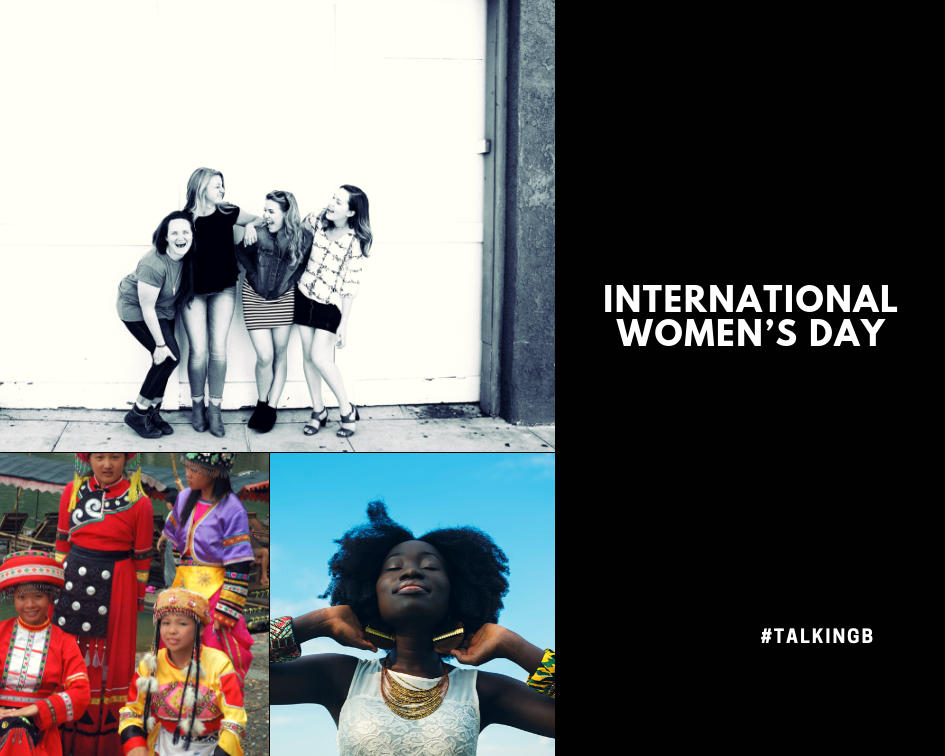
  • International Women’s day

    International Women’s day

    Women that inspire us

    We are sharing some quotes by women that inspire us. Over the years women have fought so hard, they have fought against violence, injustice, rape, inequality etc… Today, we have women flourishing in science, politics, media, churches, and every social domain. The fight is not yet over but we cannot ignore the progress that has been done.  We celebrate a girl child,  a daughter, a mother,  a wife, a sister, an aunt.

    Official picture

    Quotes 

    1. Michelle Obama 

    Michelle

    « You should never view your challenges as a disadvantage, instead, it is important for you to understand that your experience facing and overcoming adversity is actually one of your biggest advantages. »  Michelle Obama

    Michelle Obama is a symbol of strength, courage, and resilience. We are inspired by her fight for education and the empowerment of the girl child. 


    Mother theresa

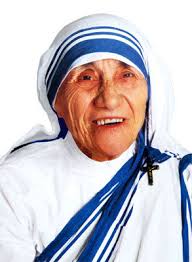
    2. Mother Teresa


    “I am not sure exactly what heaven will be like, but I know that when we die and it comes time for God to judge us, he will not ask, ‘How many good things have you done in your life?’ rather he will ask, ‘How much love did you put into what you did?” ― Mother Teresa

    Mama Teresa, the champion of love and selflessness. It’s more like choosing to intentionally love and live a life of service.


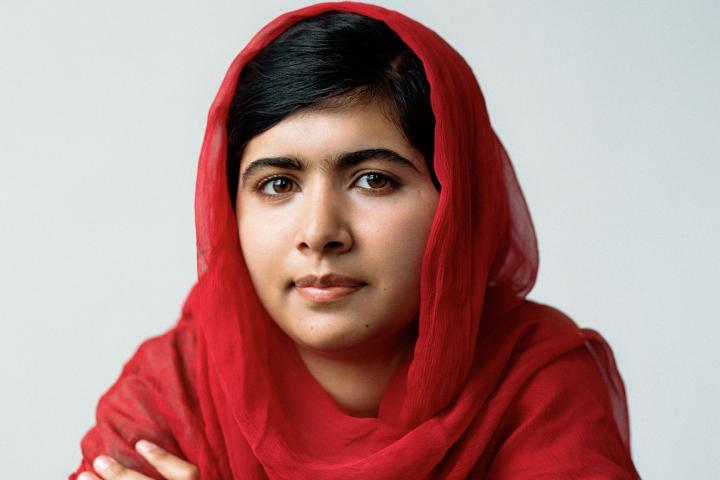
    3.Malala Yousafzai

    Malala“When the whole world is silent, even one voice becomes powerful.”― Malala Yousafzai

    Malala is a symbol of courage in the midst of fear. Always speak and stand for what you believe, people will talk at you, abuse you and sometimes shot you in the head.


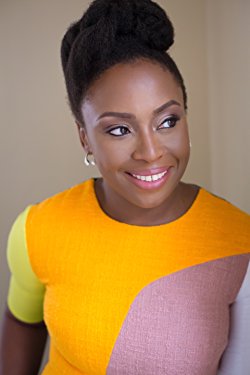
    4. Chimamanda Ngozi Adichie

    Chichi

    « It’s not your job to be likable. It’s your job to be yourself. Someone will like you anyway » Chimamanda Ngozi Adichie

    We would refer to her fearless, she says what she thinks. One of our writing mentors. The way and manner she pencils her thoughts are intriguing. This quote reflects what you feel when you read her books, she is just being real.


    Mama joyce

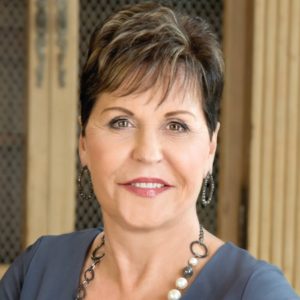
    5. Joyce Meyer 

    “Spending time with God is the key to our strength and success in all areas of life. Be sure that you never try to work God into your schedule, but always work your schedule around Him.” ― Joyce Meyer

    A purpose driven life by Joyce Meyer is one of the books that helped shape the lives of young people of our generation. Joyce Meyer speaks truths and undiluted word of God


     6. Indra Nooyi

    Indra Noya

    Leadership is hard to define and good leadership even harder. But if you can get people to follow you to the ends of the earth, you are a great leader. Indra Nooyi

    Nothing more inspiring as a good boss lady, Indra Nooyi is the CEO of PepsiCo, she is known for her amazing leadership skills and how she perfectly manages her role as mother, wife and a CEO.


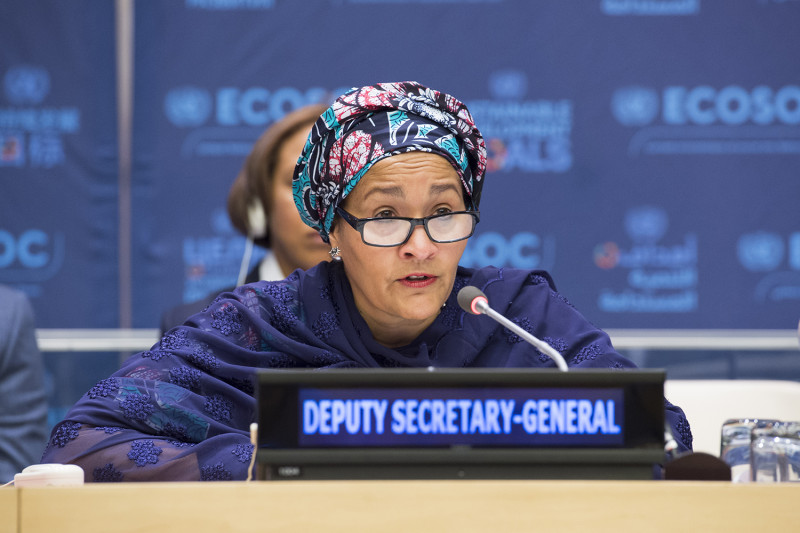
    7. Amina J Mohammed

    Economic and Social Council: Operational Activities for Development Segment.

    “Let us join forces to build a future of dignity for all, in which no one is left behind” Amina J Mohammed

    She radiates grace and beauty, leading in the United Nations, standing for the right of woman all over the world. We respect and salute you.

    We celebrate our mothers and all the beautiful women out there, keep moving, let nothing stop you!

    Share your comments and tell us about the women that inspire you?

  • CHINA AS THE NEXT SUPERPOWER

    CHINA AS THE NEXT SUPERPOWER

    Alice Lyman Miller, a China scholar and a former CIA analyst define “A ‘superpower’ as a country that has the capacity to project dominating power and influence anywhere in the world, and sometimes, in more than one region of the globe at a time, and so may plausibly attain the status of global hegemony,” This requires excelling in multiple areas of power projection: economic, military, political and even cultural . In all standards, the United States only wear the cap appropriately since it overtook Great Britain as the world’s dominant country.

    Over the years, there have been several potential superpowers emerging with promising prospects among which the European Union and the BRICS involving Brazil, Russia, India, China, and South Africa are recognized. These countries gain the individual international recognition they deserve, garnished with merited accolades in remaining relevant.

    China has proved itself to be a formidable potential global force, with an outsize influence in shaping the 21st century but whether it overtakes the U.S. is still a mystery though it seems likely. They have been able to transform a poor society by an economic miracle to become arguably the world’s second-largest economy in the world.

    In the last 15 years, China has been involved in a breathtaking and questionable lending, this goes far beyond it’s geographical regions to the depth of Africa. It is important to note that over 100 predominantly low-income countries have gotten Chinese loans in order to finance their infrastructure projects and sometimes expand their producing capacity.

    For instance, Sri Lanka experienced a boom in their economy due to a loan they had gotten from China, the country prospered in all ways and manners but this was short-lived because when the payback time came, the Sri Lanka government realized they have way too much debt. As a result, they ended up renegotiating more deals with the Chinese government which involves a 99-year lease deal handling over control of it’s investments to the Chinese government, one of which is the port of Hambantota.

    Another case, the Kilamba City in Angola is a large housing development which was built by the China International Trust and Investment Corporation and Investment Corporation with the aim of housing up to half a million people but the aftermath of this project was non-profitable as it was too expensive for the middle-class citizen. Nonetheless, the government had already signed a long term deal with their natural resources for the reimbursement of their debts to the  Chinese government.

    With over 10,000 Chinese-owned firms operating in Africa,¹ we must admit that the Chinese are doing quite well in being the next superpower but the motives are quite unclear essentially because, in some of the countries where they build infrastructural projects, they fly in their laborers taking away job opportunities from the population.

    One is forced to ask what are the inherent motives to the Chinese lending, especially to these growing economies? What are the futuristic drawbacks of being indebted to Beijing? Is this the modern day colonialism? What are their diplomatic strategies? 

    China continues to make a mark on the world as they have the largest troop in the United Nations peacekeeping missions, pays more than 10 percent of the UN’s total budget above any country besides the United States. They have shown enormous interest in developing an edge in new technologies such as hypersonic missiles, cyber and artificial intelligence.

    Obviously, China is not folding its arms for an opportunity to be presented to them on a platter of gold and have worked ceaselessly for every achievements and success they have made over the years. Nevertheless, there is more than meets the eyes.

    References:

    1. McKinsey&Company report 
  • Nigeria Election 2019: Igbo, Hausa Tensions?

    Nigeria Election 2019: Igbo, Hausa Tensions?

    There had been agitation across the nation during the preparation for the Nigeria presidential election slated for February 16, 2019, which got postponed to February 23, 2019, by the electoral commission. The incumbent President, Muhammadu Buhari got re-elected and set to be sworn in on June 12, 2019. Even though there were several propositions of rigging by members of the two major parties across several polling units, it cannot be denied that traces of hooliganism and violence were considerably seen in some states which led to the loss of lives and damage of properties.

    It was a notable occurrence that the returning president could not win in any South Eastern State despite his gigantic winning in the North. Regardless, this puzzle is not out of context in any election settings as it has reflected in several election processes in the past. Meanwhile, his party remains the runner up across the Eastern region which means several thousand voted for him even in the East.

    In 1914, Sir Frederick Lugard suggested that the two British protectorates: Southern and Northern will be under one single governor general. A few years later in 1939, the southern protectorate will later be divided into two provinces Western and Eastern. For the country was divided in such a way that the North had slightly more population than the other two regions combined which eventually marked the beginning of three geographical regions that formed along tribal lines, the Hausa and Fulani to the North, Yoruba in the South-West and Igbo to the  South-East to create the present day Nigeria.

    Should it be considered as a  fallacy of hastening generalization to draw out a conclusion that, there is a rigid marginalization coupled with an embittered rivalry between the Northern and Eastern people of the nation following the results of the elections? Understanding that after the colonial period, Nigeria suffered a continuous regional tension, caused by ethnic competitiveness, educational inequality, religious extremists, violent insurgencies and economic imbalance, with the South complaining of northern domination, and the North feared that the southern elite was bent on capturing power. ¹

    This lead to the Nigerian Civil War, also known as the Biafra War from July 1967 to January 1970 which was caused by the attempted secession of the South Eastern province of Nigeria as the self-proclaimed Republic of Biafra. Immediate causes of the war in 1966 included a military coup which resulted in General Aguiyi-Ironsi, an Igbo, assuming power as President, followed by a northerner-led counter-coup, the control of the lucrative oil production in the Niger Delta and the killings of over 80,000 Igbo people in the North of which half of them children. Could it be said that this coupled with the violent conflicts/killings in Southern Kaduna and Benue involving Christians mostly farmers attacked by Hausa-Fulani Muslim herdsmen may have fueled bitterness towards the present government of Muhammadu Buhari?

    Our aim is not to dwell on the past but to reiterate that, “No sacrifice is too much to avert chaos, prevent any further incidence of criminality, protect human lives and spare the lives of the country,”  as stated during the forum of former governors in vanguard news on July 20, 2017.  The sacrifices start with the use of information at our disposal. Planting and building on seeds of contempt and hatred will not in any way help the country. The president has a burden of responsibility on the nation, not on the area that voted him in or his tribe.


    References:

    1. Britannica. com
    2. The roots of Nigeria’s religious and ethnic conflict by  Moses Ochonu