Tag: politics

  • THE ROLES OF DEVELOPING COUNTRIES IN CLIMATE CHANGE

    THE ROLES OF DEVELOPING COUNTRIES IN CLIMATE CHANGE

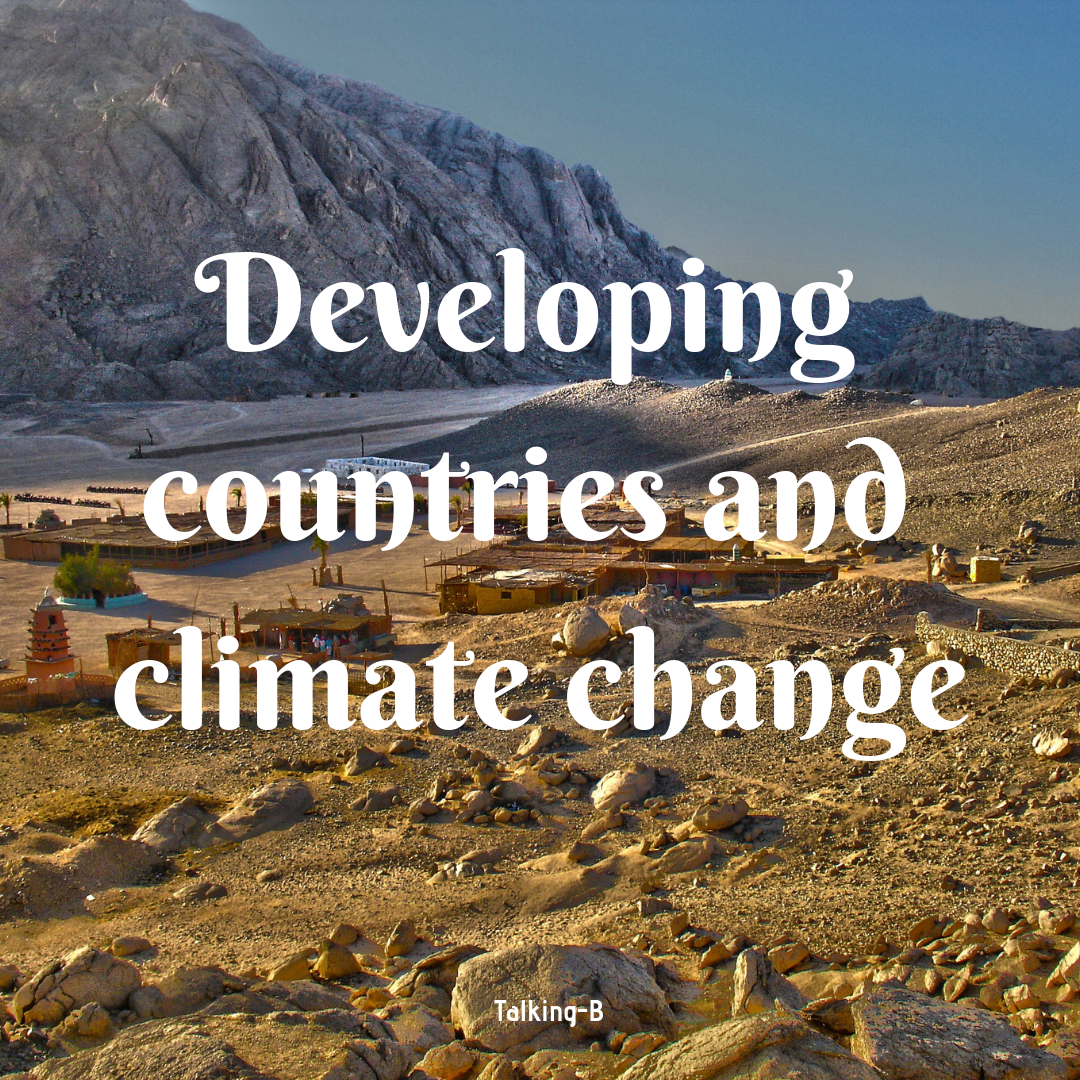
    Developing countries in the present world map primarily consist of most African countries (if not all) and some part of Asia. Unfortunately, a likely synonym for most of these countries is the phrase “praying countries”. Climate change is no longer in theory as its impacts and effects are becoming more vivid at an alarming rate across the planet earth.

    As expected, it is the developed countries clamoring the most, about the looming dangers around global warming and its ripple effects. Although, the causes of the rapidity of this unwanted change was propagated majorly by the developed countries that emitted greenhouse gases with no obstruction from the Industrial Revolution which led them to gain wealth and power. Nevertheless, their leaders, researchers, and scientists are coming up with several approaches to minimize, manage and possibly control the expected havoc by putting several control measures in place which include investing millions in the developing countries. But, are the developing countries putting the same tenacity into the few forms of resistance there is to put up?

    Climate change is a faceless looming hazard against humanity threatening the flourish of agriculture, health, economy, peace, energy infrastructure and transportation to mention but a few. Its influence includes a persistent rise in sea level, frequent drought, heavy rainfall, heavy flood, heavy snowfall, ocean acidification, expansion of deserts, heat waves, and wildfires. Considering the limitations and challenges already facing most of the developing countries, it becomes exponentially inherent for them to take up their role zealously in combating the aggressive army of Mother Nature.

    In every situation in life, information is paramount. Therefore, sensitizing people about the reality of climate change, its effect, what to expect and reiterating on the measures to reduce the expected calamity is vital. Being conscious of the fact that, telling people what to do hardly yield result without making them understand why they should do it, thus afforestation and refraining from deforestation can be encouraged, adaptation to the extreme weather and development of crops that are more resistant, long term preservative measure of farm produce to prevent looming famine, strict conformation to the building laws and avoiding building close to the water bodies to minimize dislocation and loss of shelters, keeping abreast of updated information from the  meteorologists and climatologists, aiding the visions of sustainable development goals (SDGs) in the best capacity humanly possible and facilitating Responsible consumption and recycling.

    World Health Organization (WHO) already estimated the additional deaths per annum from malnutrition, health-related problem and heat stress to be approximately 250,000 due to climate change. While, in eleven years from now, about 122,000,000 people could be forced into extreme poverty based on the estimate of The Food and Agriculture Organization of the United Nations. Several predictions have been made based on facts, reality, and researches yet, inaction is not an option, developing countries need to rise up to the challenges and save humanity.

  • CHINA AS THE NEXT SUPERPOWER

    CHINA AS THE NEXT SUPERPOWER

    Alice Lyman Miller, a China scholar and a former CIA analyst define “A ‘superpower’ as a country that has the capacity to project dominating power and influence anywhere in the world, and sometimes, in more than one region of the globe at a time, and so may plausibly attain the status of global hegemony,” This requires excelling in multiple areas of power projection: economic, military, political and even cultural . In all standards, the United States only wear the cap appropriately since it overtook Great Britain as the world’s dominant country.

    Over the years, there have been several potential superpowers emerging with promising prospects among which the European Union and the BRICS involving Brazil, Russia, India, China, and South Africa are recognized. These countries gain the individual international recognition they deserve, garnished with merited accolades in remaining relevant.

    China has proved itself to be a formidable potential global force, with an outsize influence in shaping the 21st century but whether it overtakes the U.S. is still a mystery though it seems likely. They have been able to transform a poor society by an economic miracle to become arguably the world’s second-largest economy in the world.

    In the last 15 years, China has been involved in a breathtaking and questionable lending, this goes far beyond it’s geographical regions to the depth of Africa. It is important to note that over 100 predominantly low-income countries have gotten Chinese loans in order to finance their infrastructure projects and sometimes expand their producing capacity.

    For instance, Sri Lanka experienced a boom in their economy due to a loan they had gotten from China, the country prospered in all ways and manners but this was short-lived because when the payback time came, the Sri Lanka government realized they have way too much debt. As a result, they ended up renegotiating more deals with the Chinese government which involves a 99-year lease deal handling over control of it’s investments to the Chinese government, one of which is the port of Hambantota.

    Another case, the Kilamba City in Angola is a large housing development which was built by the China International Trust and Investment Corporation and Investment Corporation with the aim of housing up to half a million people but the aftermath of this project was non-profitable as it was too expensive for the middle-class citizen. Nonetheless, the government had already signed a long term deal with their natural resources for the reimbursement of their debts to the  Chinese government.

    With over 10,000 Chinese-owned firms operating in Africa,¹ we must admit that the Chinese are doing quite well in being the next superpower but the motives are quite unclear essentially because, in some of the countries where they build infrastructural projects, they fly in their laborers taking away job opportunities from the population.

    One is forced to ask what are the inherent motives to the Chinese lending, especially to these growing economies? What are the futuristic drawbacks of being indebted to Beijing? Is this the modern day colonialism? What are their diplomatic strategies? 

    China continues to make a mark on the world as they have the largest troop in the United Nations peacekeeping missions, pays more than 10 percent of the UN’s total budget above any country besides the United States. They have shown enormous interest in developing an edge in new technologies such as hypersonic missiles, cyber and artificial intelligence.

    Obviously, China is not folding its arms for an opportunity to be presented to them on a platter of gold and have worked ceaselessly for every achievements and success they have made over the years. Nevertheless, there is more than meets the eyes.

    References:

    1. McKinsey&Company report 
  • Nigeria Election 2019: Igbo, Hausa Tensions?

    Nigeria Election 2019: Igbo, Hausa Tensions?

    There had been agitation across the nation during the preparation for the Nigeria presidential election slated for February 16, 2019, which got postponed to February 23, 2019, by the electoral commission. The incumbent President, Muhammadu Buhari got re-elected and set to be sworn in on June 12, 2019. Even though there were several propositions of rigging by members of the two major parties across several polling units, it cannot be denied that traces of hooliganism and violence were considerably seen in some states which led to the loss of lives and damage of properties.

    It was a notable occurrence that the returning president could not win in any South Eastern State despite his gigantic winning in the North. Regardless, this puzzle is not out of context in any election settings as it has reflected in several election processes in the past. Meanwhile, his party remains the runner up across the Eastern region which means several thousand voted for him even in the East.

    In 1914, Sir Frederick Lugard suggested that the two British protectorates: Southern and Northern will be under one single governor general. A few years later in 1939, the southern protectorate will later be divided into two provinces Western and Eastern. For the country was divided in such a way that the North had slightly more population than the other two regions combined which eventually marked the beginning of three geographical regions that formed along tribal lines, the Hausa and Fulani to the North, Yoruba in the South-West and Igbo to the  South-East to create the present day Nigeria.

    Should it be considered as a  fallacy of hastening generalization to draw out a conclusion that, there is a rigid marginalization coupled with an embittered rivalry between the Northern and Eastern people of the nation following the results of the elections? Understanding that after the colonial period, Nigeria suffered a continuous regional tension, caused by ethnic competitiveness, educational inequality, religious extremists, violent insurgencies and economic imbalance, with the South complaining of northern domination, and the North feared that the southern elite was bent on capturing power. ¹

    This lead to the Nigerian Civil War, also known as the Biafra War from July 1967 to January 1970 which was caused by the attempted secession of the South Eastern province of Nigeria as the self-proclaimed Republic of Biafra. Immediate causes of the war in 1966 included a military coup which resulted in General Aguiyi-Ironsi, an Igbo, assuming power as President, followed by a northerner-led counter-coup, the control of the lucrative oil production in the Niger Delta and the killings of over 80,000 Igbo people in the North of which half of them children. Could it be said that this coupled with the violent conflicts/killings in Southern Kaduna and Benue involving Christians mostly farmers attacked by Hausa-Fulani Muslim herdsmen may have fueled bitterness towards the present government of Muhammadu Buhari?

    Our aim is not to dwell on the past but to reiterate that, “No sacrifice is too much to avert chaos, prevent any further incidence of criminality, protect human lives and spare the lives of the country,”  as stated during the forum of former governors in vanguard news on July 20, 2017.  The sacrifices start with the use of information at our disposal. Planting and building on seeds of contempt and hatred will not in any way help the country. The president has a burden of responsibility on the nation, not on the area that voted him in or his tribe.


    References:

    1. Britannica. com
    2. The roots of Nigeria’s religious and ethnic conflict by  Moses Ochonu
  • The Faults in Africa Education System

    The Faults in Africa Education System

    IMG_1969

    The education system in Africa, contrary to the belief of many, existed a long time possibly taking its origin from Ancient Egypt. The Schools of Holy Scriptures built in Egypt (former Ethiopia and Al-Azhar) were the first form of higher education. These schools became cultural and academic centers attracting people from all over the globe for knowledge and instruction. Meanwhile, the world’s first university was located in Timbuktu, opened in 2600 BC.

    The indigenous knowledge system was based on traditions in which communities effectively taught and learned from themselves through daily life rather than strict education. They used modeling approaches to pass the necessary skills to younger members of the community.

    (more…)

  • The world in the face of Imperialism

    The world in the face of Imperialism

    A crisis is an unexpected event leading to dangerous and unstable results. Crisis in the past has affected countries all over the world, amounting to civil or world wars, dissolution of companies and also economic meltdown. When they affect a country’s constitutional system, they cause changes in all forms and arms of the government.

    (more…)

  • Colonization- A bowl of confusion

    Colonization- A bowl of confusion

    History is described as the chronological record of significant events that have occurred in the past and often including an explanation of how they have happened. When events happen before the written record, it is considered prehistory. According to Historians, West African region harbored some of the first settlers of people and have been in existence since 4000BCE. They grew large and created civilizations and settlements across the South of Sahara with Kingdoms often referred to as the Sahelian Kingdoms.

    (more…)

  • Rape- A cancer that feeds on the soul

    Rape- A cancer that feeds on the soul

    Humans have thus far accumulated an ocean of knowledge that transforms humanity to a modern version in all ramifications. Nevertheless, derogatory behavior such as rape still has a firm grip on a large ratio of the human race irrespective of geographical location, status, religion, color or tribe.

    (more…)

  • Europe and the Immigration flaws

    The Prime minister of Italy Luigi Di Maio has recently made an outright call out to France and her political system. He accused the country of impoverishing most of the states in Africa. In a rally, Di Maio said “If today, people are leaving Africa, it is because some European countries, with France taking the lead, have never stopped colonizing tens of African states” He talked about colonization which means they have never stopped seeing these African countries as « the Whiteman’s burden »

    IMG_1889

    (more…)

  • Nigeria at a juncture

    The right to information is the core of any good society, government, and economy; this is necessary for the prevention of malpractices, misconduct, abuse of power, violation of rules and illegal activities. In the Western world, the government is held accountable for all deeds in the past, present, and future because they know, that this shows respect and empower their citizens. By informing citizens adequately, they know when and how they should cast their votes, and most importantly gives them a chance to speak out against all sorts of injustices.

    IMG_1854

    (more…)

  • Thoughts on The Democratic Republic of Congo’s presidential elections: A leap of faith?

    Despite trusting instincts that always failed for so long, people are still patriotic enough to perform their civil right with the speck of hope that this time it would not fail them. Politicians everywhere are known for campaigning, speaking, debating and sometimes, responding to direct questions from the masses. The public is often convinced that majority trust and some dismay. Instincts are good signs but most times misleading.

    Image by ronen barany

    (more…)