Tag: international news

  • The Sustainability of The Nigeria Lockdown.

    The Sustainability of The Nigeria Lockdown.

    Nigeria like many other African countries always like to take a cue from their European counterparts forgetting about the practicability of the model employed.

    The Chinese government, on the one hand, deployed the lockdown method to curb the spread of COVID-19 although draconian in the implementation which yielded the desired result. The Europeans, on the other hand, assessed their environment and culture and came up with the concept of social distancing as that’s the most suitable in an European western configuration.

    The government envisaged and identified the negative social-economic, and financial impact of the stay at home order and then rolled out palliatives in form of financial relief to cushion the effect of the financial strain on an average family during this precarious and perilous times. The government understands that mental health could deteriorate and begin to sink into mediocrity as human beings are considered social animals, they set up phone lines where people can reach out should the need arises to speak with a psychologist.

    When I heard Nigeria adopted this formula I quickly embarked on some irresponsible rhetorics regarding the workability then I re-evaluated the scenario and concluded that we’re headed in the wrong trajectory.

    Firstly, the vast majority of the populace live in extreme poverty thereby making an average housing look like a luxury. This vast demography settle in a nucleated, congested, and unhealthy environment where social distancing measures is seemingly impracticable.

    Secondly, a large chunk of the population live hand to mouth meaning they can only feed if they work on a daily basis. The lack of database which has been the major drawback of our economic development has made it impossible to roll out financial relief adequately. Trouble and anarchy looms as people have started flouting the lockdown order, these individuals do not have a choice as they’ve been left with their faith, the basic needs like electricity, social security, employment opportunities, infrastructures, etc are absent and in some cases non-existent.

    I do not understand a government that would implement a lockdown and not have a robust plan for the most susceptible individuals like a Door- to – Door feeding strategy and the provision of basic amenities. Sadly, in a nation like Nigeria, a copy and paste strategy like the case of their European counterparts cannot work as the financial and economic impact is more likely to kill than the virus itself. It’s about time they went back to the drawing board.

    By Akintayo J. Akingbade

    Email : Akintayoakingbade@gmail.com
  • Plane: A symbol for success or A mere means of transportation?

    Plane: A symbol for success or A mere means of transportation?

    In 1903, the Wright brothers invented and flew the first airplane, this was recognized as “the first sustained and controlled heavier-than-air powered flight”. 

    Why was plane invented?

    Airplanes are important because they are capable of transporting parcels as well as people to the other side of the world in less than a day. Airplanes deliver quick supplies to remote locations in emergency situations and restock military operations. Airplanes also improve medical care by quickly moving patients from rural areas to large medical centres and transporting organs to distant locations for transplants. Before the advent of safe and convenient travel by airplane, journeys took much longer and were more difficult. That’s why invention of airplanes was considered important.

    Now to the main gist….

    A plane is simply a means of transportation.

    Dear Africans, 24 hours in Ukraine, United States of America, United Kingdom is same as 24hours in Nigeria, Ghana, we only experience time difference, please stop putting pressure on your brothers and sisters in diaspora. Depression is real. (more…)

  • South Africa and Xenophobia

    South Africa and Xenophobia

    During the inauguration of President Nelson Rolihlahla Mandela the country’s first black head of state and the first elected in a fully representative democratic election, he said  

    We dedicate this day to all the heroes and heroines in this country and the rest of the world who sacrificed in many ways and surrendered their lives so that we could be free. Their dreams have become reality. Freedom is their reward. We are both humbled and elevated by the honour and privilege that you, the people of South Africa, have bestowed on us, as the first President of a united, democratic, non-racial and non-sexist government.

    We understand it still that there is no easy road to freedom. We know it well that none of us acting alone can achieve success. We must therefore act together as a united people, for national reconciliation, for nation building, for the birth of a new world.

    Let there be justice for all.

    Let there be peace for all.

    Let there be work, bread, water and salt for all.

    Let each know that for each the body, the mind and the soul have been freed to fulfil themselves.Never, never and never again shall it be that this beautiful land will again experience the oppression of one by another and suffer the indignity of being the skunk of the world. Let freedom reign. The sun shall never set on so glorious a human achievement! God bless Africa!Thank you.

    You look at South Africa today and you can’t but feel the late president Mandela was only speaking for himself. South Africans today are tribalistic towards one another, a certain tribe believes they own the country and other matters less. Consequently, that has been extended to foreign nationals who fought and supported South Africa during the harsh years of apartheid.

    The Xenophobic attack on May 11, 2008 at Alexandra, Johannesburg is still fresh in memories, a lot of nationalities especially Nigerians lost their lives and properties.The reason given by the South Africans is that foreigners are stealing their jobs, check the statistics below:

    Population of South Africans is approximately 57 million people; 

    Unemployment rate in South Africa is 29 percent, which makes about 8.6 million South Africans, forecasted to rise to about 10 million before end of the year 2019.

    There are only 2.2 million foreigners in South Africa

    The question is, how can 2.2 million people be the reason for unemployment of 8.6 million people?

    On July 20 2008, Nobel Peace Prize laureate Archbishop Desmond Tutu offered his apology to victims of the violence during a mass before thousands of worshippers.“Those who have been victims, we want to tell them we are sorry and we will not repeat this.We won’t tolerate this,” 

    He said, recalling the protection neighbouring countries offered militants struggling to end the nation’s apartheid regime.

    We were welcomed as exiles, as freedom fighters in those African lands.

    Could we really have forgotten so soon?”

    May I include that the motive behind the recent violence and looting of properties was not xenophobic but this is difficult to prove because South Africans have shown the attitude many times in the past among themselves and to foreign nationals. A borderless Africa is the way to our unity, our unity is non-negotiable.

    Reference:

    South African Government Information Website

    AUTHOR: OBAFEMI OLUGBEMIGA: obafemiolugbemiga@gmail.com

  • Are you a changemaker?

    Are you a changemaker?

    Life from the time immemorial regardless of region, race, available technology, political and economic prowess has often experienced and will continue to witness the unprecedented actions of selected few over diverse sectors, law and order, rights and wrongs, innovations, self-discovery, technological breakthroughs among a host of several other groundbreaking events. These radical set of being has been called by many names like innovator, legend, role model, a game changer, even god but for the purpose of this article, we prefer an astute term – change maker.

    (more…)

  • Is Zero Hunger Possible?

    Is Zero Hunger Possible?

    Human beings would continue to stay alive as long as they breathe either aided or naturally but many factors cycle around sustaining the existence which include quality of health and shelter but most important factors are access to clean water and food. In absence of these factors, there will be no plans neither dream for comfort, technological advancement, discoveries nor the host of researches we now invest our interest in as the “thinking being”.

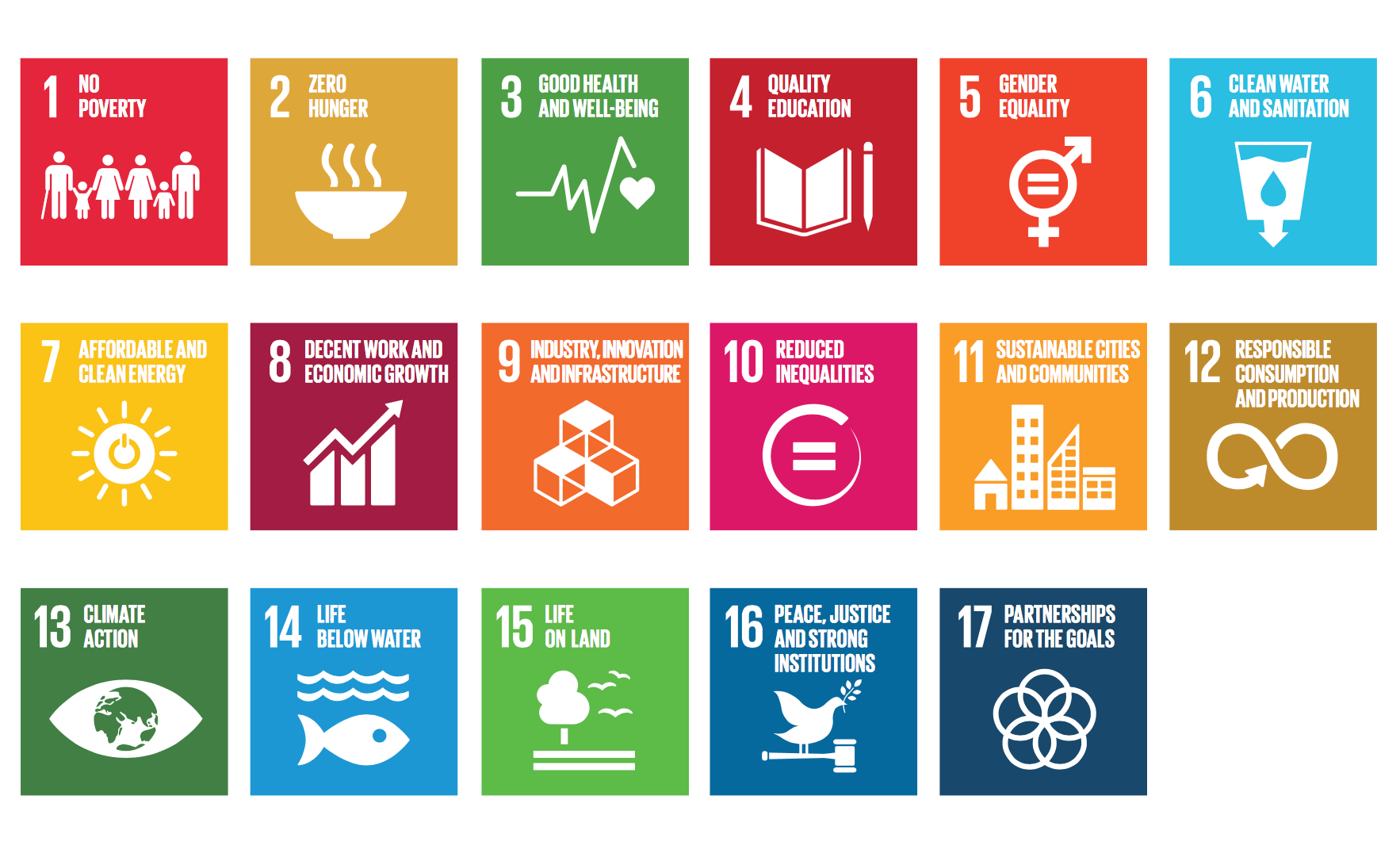
    World leaders in the quest to make the planet more habitable came up with a movement termed Millennium Development Goals (MDGs) committed to achieving a set of eight measurable goals in the year 2000. Though, it met with a lot of challenges including world economic recession but was able to perform impressively towards achieving “halving the poverty level” in the world at the set target date, 2015.

    sdg-hero

    (more…)

  • The Paradox of a Praying Nation

    The Paradox of a Praying Nation

    One will assume that religious chastity equals good morals, the twist in religion and religious acts in glorifying corruption is alarming. Where prayers exist, corruption should not cohabit because these two are conflicting puzzles annihilating our society on a daily basis. Prayers are often said out of ignorance and sometimes used as tools of amassing wealth and keeping the populace in continuous poverty. 

    (more…)

  • Mental health in corporate organizations

    Mental health in corporate organizations

    Employment and its relevance have shifted grounds over the years for many reasons and the same can be said about the condition of engagement, working conditions, and output. Things were different before the inventions of machines as people engage grossly in primary survival activities like farming, fishing, and hunting which encompasses trading and transportation with time.

    Upon the introduction of machines during the industrial revolution, there were several other employment opportunities and exposures which include the printing press, mass production of several products with the advancement in transportation and communication et al. This evolution eventually gave birth to information age when almost everything is computerized and interlinked with the intensified use of the internet. There has been a persistent rise in the expectations of employers (government inclusive) from their employees to deliver excellently in the ever competitive market where there are millions of qualified but unemployed substitutes ready to replace any worker or staff lacking in any way. Thus, the struggle knows no boundary leading to several challenges in our corporate organizations.

    (more…)

  • Education Malpractice

    Education Malpractice

    The breach of professional expertise in our education system leads to raising incompetent students and future professionals. Examination malpractice has done more harm than good, many students are weak educationally because their academic process has been built on a faulty ladder. Malpractice effects in mismanagement, misconduct in pupils and even negligence in legal means of achieving success.

    Recently, in the United States celebrities, coaches and other influential people have been charged with corruption and bribery. The scandal which has been a major topic is related to wealthy parents aiding their children to get into the best universities in the country. In some of the cases, the children are unaware of these dealings. One will ask whether parents assisted their children in order to maintain their personal social status or is it just a means of helping their wards secure a promising future?

    The fraud conspiracy involved a huge amount transferred to a particular Mr. Willian Singer who allegedly received more than 25 million dollars from March 2011 till the moment he was charged in February 2019. One of the arrangements is that he categorized the students as athletes. In the United States, sports is a big deal as it brings in finances to the universities which is why the academic requirements are often reduced to bring in potential talent. The most outrageous involved classifying the students as disadvantaged or having some learning disabilities to grant them extra time and provide them special conditions.

    This was alarming and went over the news and media houses in the United States. Some of the celebrities were charged and stripped of their contracts, sponsorships, and deals. The case is still open and serious investigations are ongoing. Civil society termed the scandal as unbelievable, immoral acts, impossible, injustice, etc…

    Unfortunately, in most parts of Africa, this is not the case. Education malpractice and corruption are cultural and consistently a means of living. It is more like « you use what you have to get what you want » mentality. Cheating, though an illegal act, is common and many students get good grades by cutting corners. It is just as politicians rig elections to get into offices so do students cheat and partake in all sorts of misconduct to achieve success as they climb the educational ladder.  Why is the cost of success this expensive even when it entails moral misconduct?

    In the case of William Singer, he supposedly dealt with an important sum of money and relatively the wealthiest parents while, in the developing countries, even the middle-class parents and sometimes the impoverish ones involve themselves in educational malpractice. It is a societal mindset including depicting identities, illegal conspiracy and aiding and smuggling of question papers and answers in and out of the exam halls.

    Like we say, it is easier to blame the government for bad policies in Africa but, if each person makes a conscious decision to be honest in their dealings, the continent will be transformed. Education should focus more on creating skills and giving practical experiences rather than aiming for a certificate. To what extent is having a certificate or degree that one cannot defend?


    References:

    1. BBC World News 
    2. International Journal of Managerial Studies and Research
  • What is a Nation without Infrastructure?

    What is a Nation without Infrastructure?

    When we are in a state of ignorance, it means we haven’t had the opportunity to be aware or we deliberately disregard important information. Our society is divided into the two aforementioned, with political leaders enlightened about how to better their government but neglect the feasibility, and citizens in complete obscurity of their rights.  While the latter explains the category of people who sometimes don’t expect more than what is within their reach, unable to challenge the status quo. The former is aware that improvement can be done but totally evade the possibility sometimes for their own personal interest.

    Infrastructure and basic amenities are the major problems in Africa especially in Sub-Saharan Africa ranging from electricity and water to roads, railways, functional airports and ports. No economy can function appropriately without infrastructure causing a decline in productivity. Opportunities come with power, for example, a petit trader of frozen fish will be able to run her shop effectively if she is guaranteed of regular power, it means she can use her profit for something else, maybe providing education for her child instead of spending on fuel for the generator. Traders and manufacturers will always need a reliable source of power and water, the population will always require good roads to enable movement and also importers and exporters will require ports to move their goods.

    Leaders in Africa have been exposed to the international standards of living sometimes, by attending meeting and summits in other countries. In some cases, they have spent their study years living in economically developed countries, they have tasted and benefitted from good and perfect infrastructural settings. What then is the cause of this drawbacks in our countries?  It is obvious that infrastructure is important in providing a quality life for people and promoting economic development but it is also a shame that some older people who have never had the opportunity to travel out of their countries might eventually go into their grave without experiencing 24/7 constant power supply. How pathetic! 

    Also, the rise of urbanization has caused a desire to move and relocate to urban centers thereby overpopulating these regions, Some urban centers house more people than its superficial. It is the crossroads where all ethnics meets thereby causing congestion, some of them live in dilapidated buildings with large families squeezed into unfit structures eventually leading to their collapse, especially in the swampy areas.

    The government aptitude has to increase in ensuring the safety and well being of their population by providing the necessary infrastructure. A long term vision, maintenance and continuous progress by the government could be possible solutions. Additionally, the population has to be educated and cultivate good humanly habits. It is effortless to blame the government and leaders but the real change starts with revisiting our mindset as a people.

  • CHINA AS THE NEXT SUPERPOWER

    CHINA AS THE NEXT SUPERPOWER

    Alice Lyman Miller, a China scholar and a former CIA analyst define “A ‘superpower’ as a country that has the capacity to project dominating power and influence anywhere in the world, and sometimes, in more than one region of the globe at a time, and so may plausibly attain the status of global hegemony,” This requires excelling in multiple areas of power projection: economic, military, political and even cultural . In all standards, the United States only wear the cap appropriately since it overtook Great Britain as the world’s dominant country.

    Over the years, there have been several potential superpowers emerging with promising prospects among which the European Union and the BRICS involving Brazil, Russia, India, China, and South Africa are recognized. These countries gain the individual international recognition they deserve, garnished with merited accolades in remaining relevant.

    China has proved itself to be a formidable potential global force, with an outsize influence in shaping the 21st century but whether it overtakes the U.S. is still a mystery though it seems likely. They have been able to transform a poor society by an economic miracle to become arguably the world’s second-largest economy in the world.

    In the last 15 years, China has been involved in a breathtaking and questionable lending, this goes far beyond it’s geographical regions to the depth of Africa. It is important to note that over 100 predominantly low-income countries have gotten Chinese loans in order to finance their infrastructure projects and sometimes expand their producing capacity.

    For instance, Sri Lanka experienced a boom in their economy due to a loan they had gotten from China, the country prospered in all ways and manners but this was short-lived because when the payback time came, the Sri Lanka government realized they have way too much debt. As a result, they ended up renegotiating more deals with the Chinese government which involves a 99-year lease deal handling over control of it’s investments to the Chinese government, one of which is the port of Hambantota.

    Another case, the Kilamba City in Angola is a large housing development which was built by the China International Trust and Investment Corporation and Investment Corporation with the aim of housing up to half a million people but the aftermath of this project was non-profitable as it was too expensive for the middle-class citizen. Nonetheless, the government had already signed a long term deal with their natural resources for the reimbursement of their debts to the  Chinese government.

    With over 10,000 Chinese-owned firms operating in Africa,¹ we must admit that the Chinese are doing quite well in being the next superpower but the motives are quite unclear essentially because, in some of the countries where they build infrastructural projects, they fly in their laborers taking away job opportunities from the population.

    One is forced to ask what are the inherent motives to the Chinese lending, especially to these growing economies? What are the futuristic drawbacks of being indebted to Beijing? Is this the modern day colonialism? What are their diplomatic strategies? 

    China continues to make a mark on the world as they have the largest troop in the United Nations peacekeeping missions, pays more than 10 percent of the UN’s total budget above any country besides the United States. They have shown enormous interest in developing an edge in new technologies such as hypersonic missiles, cyber and artificial intelligence.

    Obviously, China is not folding its arms for an opportunity to be presented to them on a platter of gold and have worked ceaselessly for every achievements and success they have made over the years. Nevertheless, there is more than meets the eyes.

    References:

    1. McKinsey&Company report